
Last updated November 14, 2026
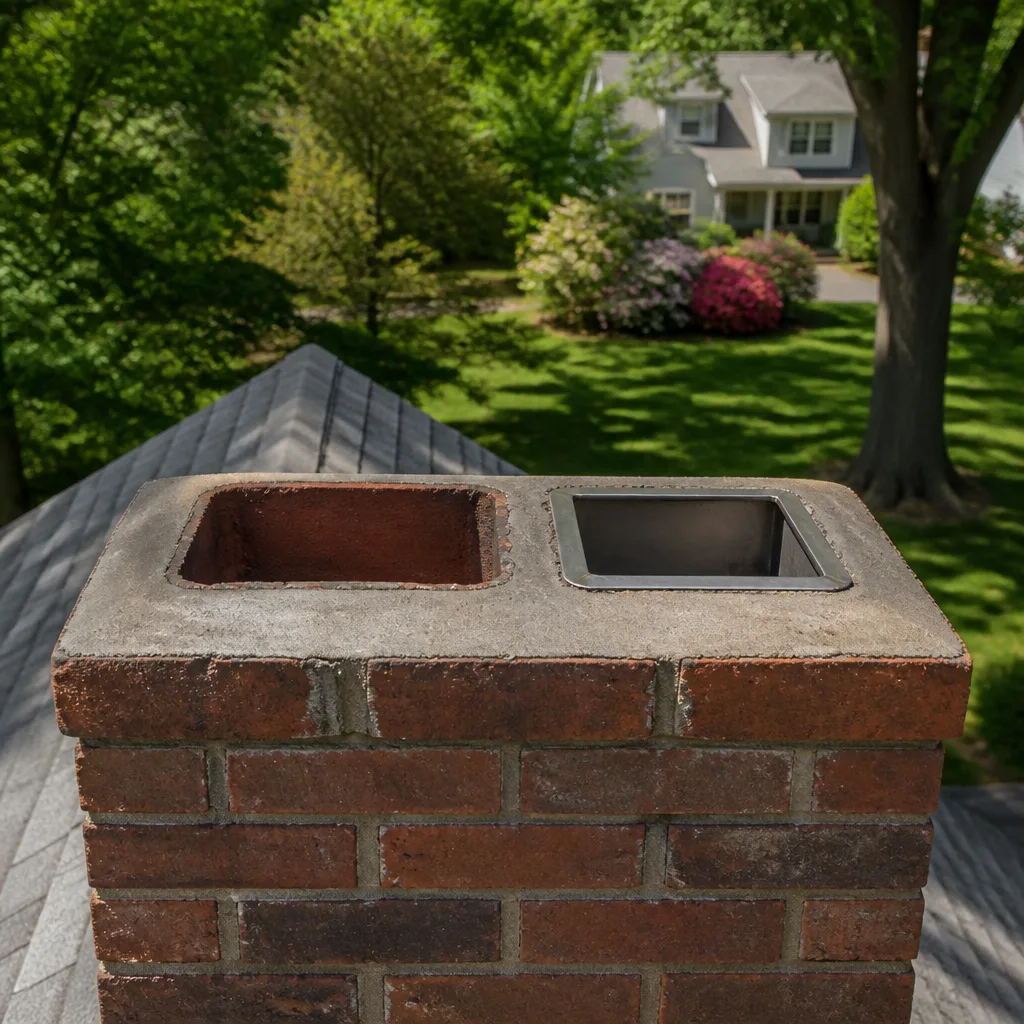 Sweep & inspection
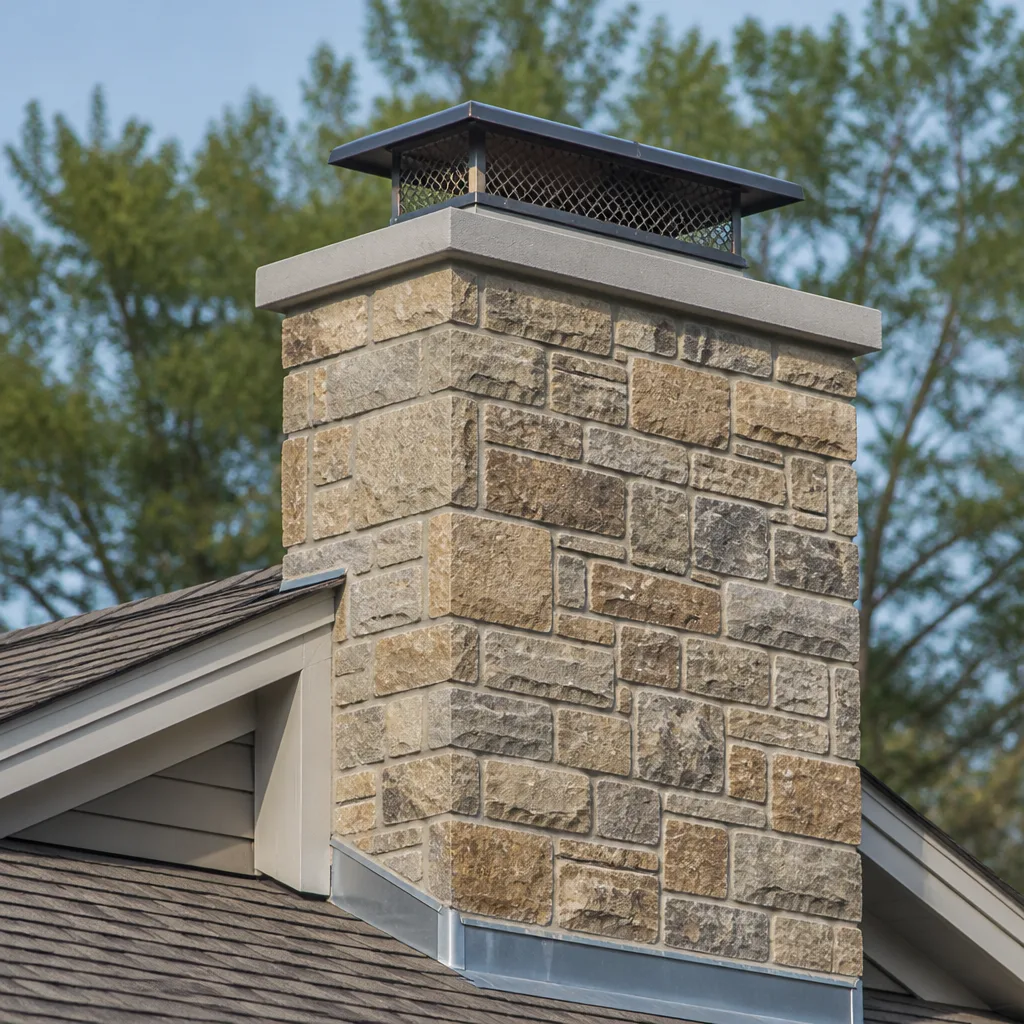 Caps & crowns
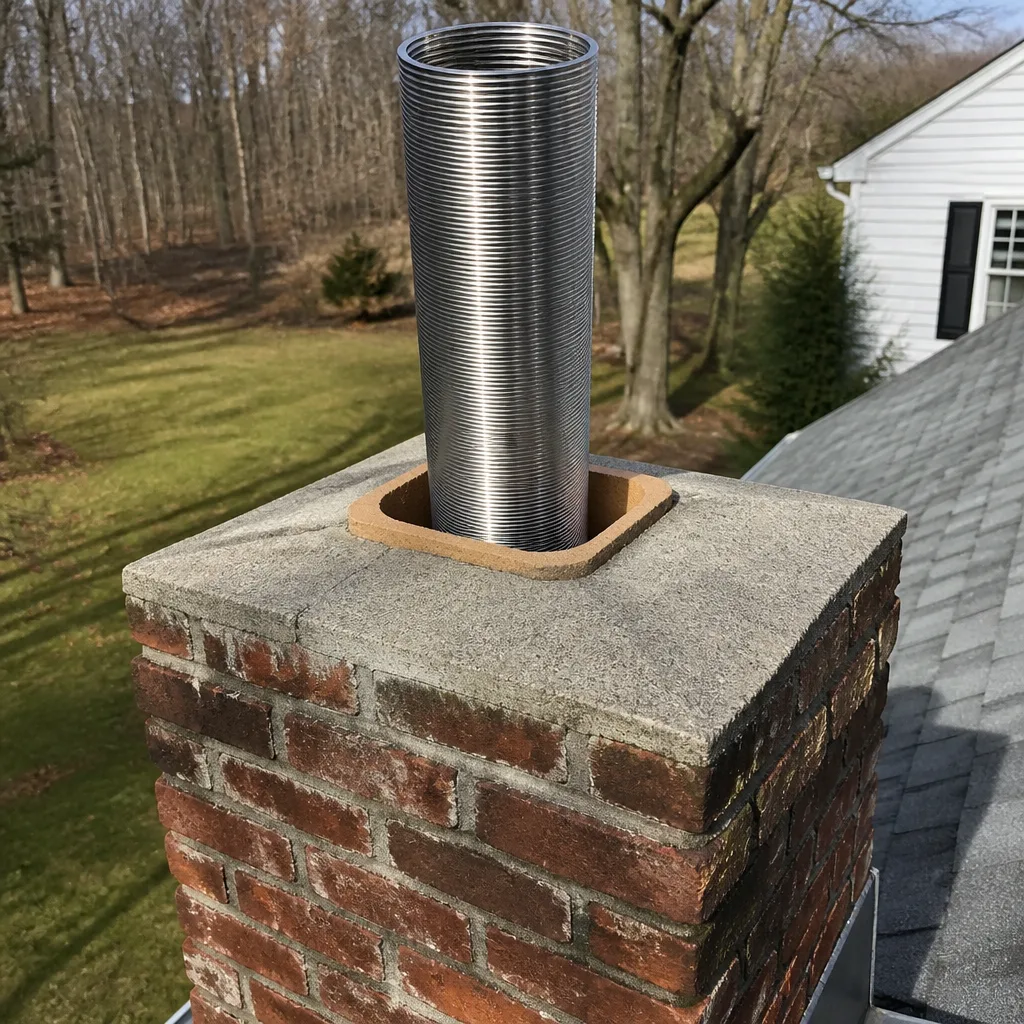 Flue relining
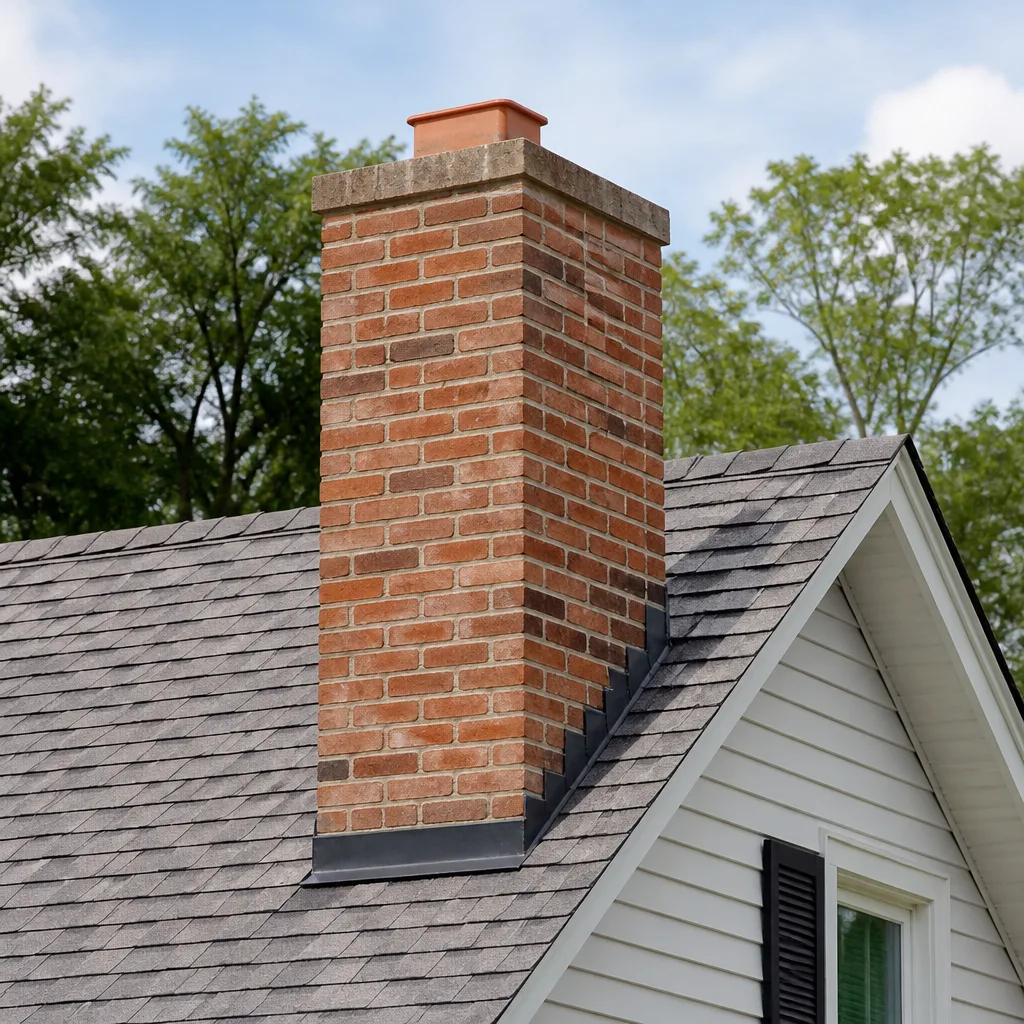 Masonry repair
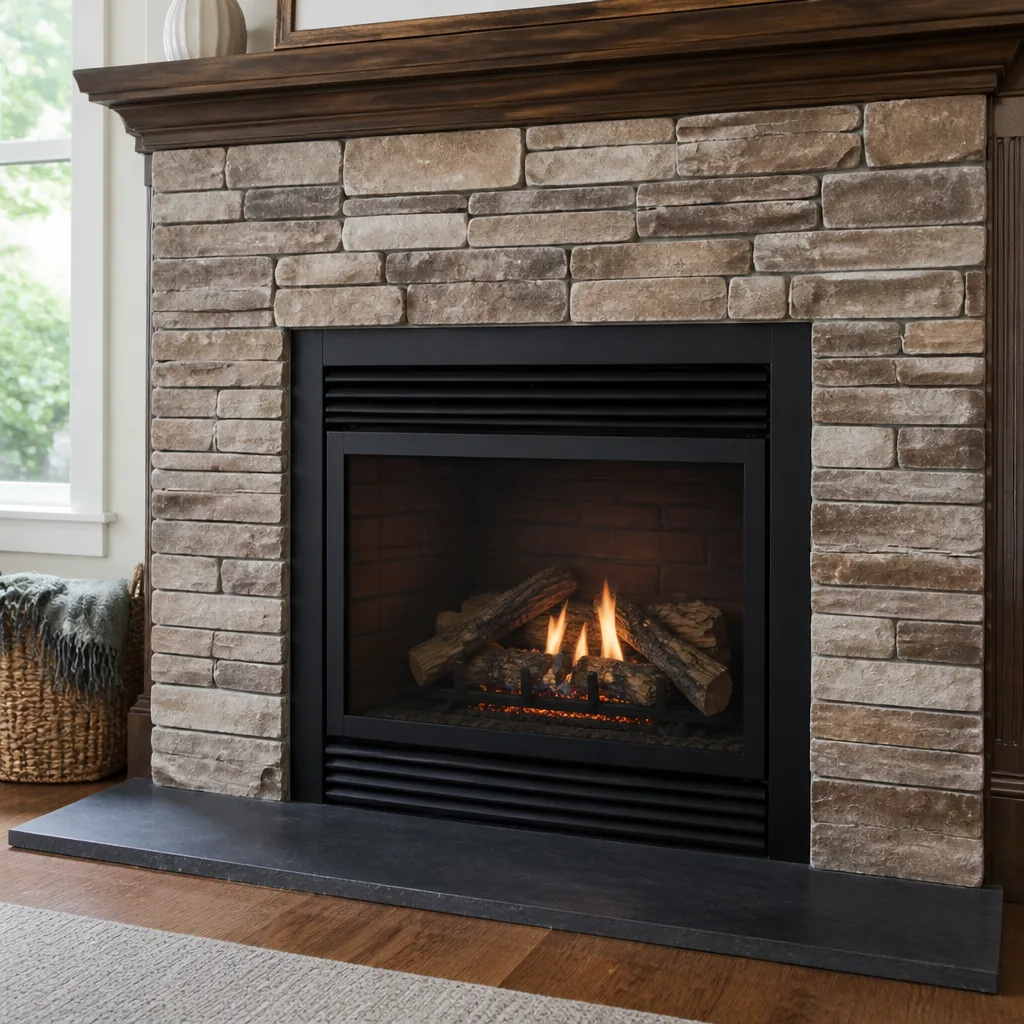 Gas fireplace service
Level 1 sweep and inspection to the NFPA 211 annual standard - flue, crown, cap, and flashing checked and photographed
Chimney sweep logs do not sweep chimneys. They loosen some creosote - which then falls where a brush and vacuum still have to collect it.
The Complete Guide to Chimney Cleaning in Manchester
Most chimney guides treat cleaning as one step: a brush goes down the flue, soot comes out, done. Anyone who has worked in Manchester’s housing stock knows the job starts before the brush. The brush is the easy part. The real work is reading what the flue already holds. In a city where winter freeze-thaw cycles work mortar loose every March and where a lot of older housing still carries the residue of an oil heating era, the smart money is on a proper inspection first.
This guide is for homeowners who have a fireplace, wood stove, or gas insert and want to know what cleaning actually involves, when it’s necessary, and how to tell the difference between a thorough job and a quick sweep. We’ll cover what Manchester’s climate does to chimney masonry, what a Level 1 inspection is versus a Level 2 and when each applies, and what “cleaning” should include when it’s done right.
Quick Answer
Chimney cleaning in Manchester is more than sweeping soot. A proper cleaning removes creosote and debris from the firebox, smoke chamber, and flue liner, while a professional inspection checks the mortar, cap, and liner condition. In Manchester’s climate, the inspection matters as much as the sweep, because freeze-thaw cycles and older heating-system history can leave damage the brush won’t reveal.
Styles & brands we work with
- Sweep & inspection
- Caps & crowns
- Flue relining
- Masonry repair
- Gas fireplace service
Table of Contents
- Why Manchester’s Climate Changes What a Cleaning Involves
- The Oil-to-Gas Legacy in Older Manchester Housing
- What Chimney Cleaning Actually Includes
- Level 1 vs. Level 2 Inspections: When Each Applies
- Sweep-Only vs. Full-Service: Why It Matters
- How Often Manchester Chimneys Need Cleaning
- The Repairs That Usually Surface
- Common Mistakes to Avoid
Why Manchester’s Climate Changes What a Cleaning Involves
A chimney in a milder climate has a fairly predictable life. The flue gets soot, the brush clears it, the cap keeps the rain out. Manchester sits in a hard freeze-thaw band, and that single fact reshapes what a technician should be looking for. Water gets into masonry joints through the summer. It freezes hard in winter. As it expands, it pushes mortar and brick apart from the inside. When it thaws, small spalled chips fall away, and the joint gets wider, so more water gets in next winter.
That cycle runs year after year on a lot of older Manchester housing stock, particularly the triple-decker apartment buildings and older single-family homes that predate modern masonry cement. A sweep-only crew pulls soot and sees nothing else. A technician trained to look for what freeze-thaw does will notice the crumbled mortar, the loose brick at the crown, the tiny gap behind the damper frame that the chimney doesn’t show until it’s inspected.
For a homeowner, the practical takeaway is this: in Manchester, a cleaning visit should include a visual inspection of the masonry, not just the flue. Look for these signs when you’re booking:
- Sandy or crumbly mortar visible at the crown or the firebox joints
- White staining on the exterior brick (efflorescence, from water passing through the masonry)
- A cap that’s loose, missing, or pulling away from the flue
- Rusted or degraded damper hardware
If the chimney company you’re calling only talks about sweeping, ask what their inspection covers. Manchester Chimney Cleaning treats inspection and cleaning as one job because in this climate the two cannot be separated.
The Oil-to-Gas Legacy in Older Manchester Housing
Manchester’s heating history runs through oil. A lot of older homes around the city, from the North End to neighborhoods near downtown, were originally heated with oil furnaces or oil-fired boilers. When natural gas became available and cheaper, many of those systems were converted. The furnace got replaced. Sometimes the chimney served the old oil system and now serves a gas system, and the flue wasn’t always changed to match the new appliance’s requirements.
What that leaves behind matters for cleaning. Oil combustion produces sulfur byproducts, and over time those byproducts settle into the flue liner as deposits that are not the same as wood soot. If the chimney has since served a gas appliance, those deposits remain on the liner wall, sometimes flaking, sometimes bonded. A brush pass clears what’s loose, but a technician should know to look at what’s bonded and what the liner looks like under it.
For a homeowner, the questions to ask are:
- Was this chimney originally built for an oil appliance?
- What is the current appliance, and when was it converted?
- Is the existing flue liner appropriate for the current appliance’s venting requirements?
The honest answer, in a lot of older Manchester homes, is that the liner was never upgraded. That doesn’t always mean a replacement is required. It does mean the condition of the liner needs to be checked before anyone says the chimney is clean. If the liner is deteriorating but still sound enough for restoration, a HeatShield repair can extend its life. If it’s compromised past that, a proper relining might be needed. The right call starts with an inspection, not a price quote over the phone.
What Chimney Cleaning Actually Includes
A thorough cleaning is not one pass of a brush down the flue column. It’s four distinct zones, and each one holds a different kind of debris. If a crew only works the flue, they’re cleaning perhaps a third of the system.
1. The Firebox
Ash, unburned wood, and creosote flakes collect here. This is also where a technician can see the firebox walls and the damper frame for cracks. Cleaning it means removing the debris and inspecting the firebox joints.
2. The Smoke Chamber
The smoke chamber is the sloped area above the damper and below the flue. Creosote sticks to the walls of the smoke chamber because the gases cool there. A cleaning crew has to actually reach the smoke chamber walls to clear it. Soot accumulation here is a common source of chimney fires because a spark can ignite the layer and travel up the flue. A sweep that only works the flue column misses this entirely.
3. The Flue Liner
This is the brush pass: removing the creosote and soot from the liner walls. A technician should check the liner’s condition while working. A tile liner with visible cracks or gaps needs attention. A stainless liner, whether original or installed as a relining, needs checking for joint security and corrosion.
4. The Cap and Crown
The cap and crown are the chimney’s first defense against weather. A missing or damaged cap lets water and animals into the flue. The crown, the sloped concrete top, cracks over time from freeze-thaw. A technician should inspect and, if there’s an issue, flag it for repair.
A cleaning that doesn’t include all four zones leaves problems behind that only show up later. Full service here means inspection, cleaning, and the repair if one turns up. The same visit should cover both flues in most homes: the chimney flue and the dryer vent. For the dryer side, the work is dryer vent cleaning, and it uses Famco products made for that job rather than a brush improvised from the chimney kit.
Level 1 vs. Level 2 Inspections: When Each Applies
NFPA 211, the standard for chimneys, fireplaces, vents, and solid fuel appliances, defines three inspection levels. In practice, Manchester homeowners encounter Level 1 and Level 2 most often. They are not interchangeable, and knowing the difference matters most when a home is about to change hands.
Level 1 Inspection
A Level 1 is the inspection performed as part of a routine annual cleaning. It covers readily accessible portions of the appliance, the connector, and the chimney. The technician is looking for soundness, obvious damage, and evidence of deposits. If you’re having your chimney cleaned once a year and nothing has changed at the system, a Level 1 is what’s called for.
Level 2 Inspection
A Level 2 covers everything in a Level 1 plus accessible portions that require opening or removing a door or panel, and it typically includes a video camera inspection of the flue interior. This is the level triggered by specific events:
- A change in the appliance or fuel type (such as an oil-to-gas conversion, which happened in thousands of older Manchester homes)
- A change in the flue’s operating conditions
- A transfer of property (a home sale)
- An event that may have caused damage to the chimney (a chimney fire, an earthquake, a severe weather event)
- An installation of a new appliance
When a Home Sale Triggers a Level 2
In New Hampshire, home sales commonly require a chimney inspection as part of the transaction, and when the sale involves a wood-burning appliance or a fireplace, the inspection level that covers a sale is a Level 2. Real estate contracts in this market, and lenders where applicable, often ask for a chimney inspection report, and a Level 1 doesn’t satisfy what most buyers and their inspectors are looking for. That’s the specific trap: a homeowner orders a “quick sweep” before closing, gets a Level 1, and then the buyer’s report requires a Level 2 with a camera inspection, and the closing timeline gets stretched while it’s re-done.
Quick Answer: If a home sale is in the picture in Manchester, ask for a Level 2 inspection with a camera. A sweep-only visit usually is a Level 1, and it won’t cover what a sale requires.
A camera inspection shows the liner from the inside, where you can see the cracks, gaps, and deposits for yourself. If a company is going to recommend a liner repair or replacement, they should be able to show you the footage that prompted it. That’s the standard we hold ourselves to.
Sweep-Only vs. Full-Service: Why It Matters
A sweep-only crew has one tool: the brush. A full-service chimney company has the brush plus a repair shop, a liner supply line, and a technician trained to use both. The difference for the homeowner shows up in three places.
The inspection has an incentive. When a company cleans and repairs, catching a problem is a service opportunity rather than a sales pitch to an outside contractor. The incentive runs toward flagging issues early, not toward minimizing them. If the chimney needs a liner restoration, a full-service company can quote and complete it.
The materials are real. A company stocked on professional-grade product lines is working with what certified technicians use industry-wide. HeatShield for liner restoration, Gelco for masonry products, Olympia Chimney for venting components, Famco for dryer vent materials, all of these are made for the job. That’s a different category from improvised fixes. A stainless liner for a complex or older flue can be installed with a DuraFlex flexible liner where a rigid one won’t fit.
The problem gets fixed. A sweep-only crew can tell you what’s wrong. A full-service crew can fix it. From annual sweep to full liner restoration with HeatShield, one crew, one call. The homeowner isn’t left holding an inspection report that needs three follow-up visits to resolve.
If you live in Manchester and want to see the full scope, our chimney sweep page covers both services together. The main page for the company and our location is Manchester.
How Often Manchester Chimneys Need Cleaning
The common recommendation is an annual cleaning and inspection for a chimney in active use. That’s a good starting point. In Manchester, the specifics of your chimney and how it’s used push the schedule one way or the other.
If you burn wood regularly through the heating season, an annual cleaning is the baseline. Wood fires produce creosote, and creosote accumulates in proportion to how much you burn. If you’re burning daily through January and February, the flue may need cleaning before year one is up. The best measure is the depth of the creosote layer. A technician can show you what’s in the flue at each visit.
If you burn only occasionally (a few fires a season for ambiance), you may get several years between cleanings, but annual inspection still matters because the freeze-thaw damage and liner condition don’t track to how often you light a fire. The chimney still takes weather every winter.
If you have a gas insert, the creosote volume is low, but the flue still can collect debris and the venting needs checking. A gas appliance that opens to a masonry chimney still uses that flue, and the deposits from gas combustion are worth inspecting on a regular cycle.
If it’s a dryer vent, the recommendation usually runs once a year for typical use and more often for large households. Lint accumulation in the dryer vent is the second fire hazard, and most people don’t think to check it. Alongside the chimney sweep, dryer vent cleaning is what covers both flues in the home.
A simple schedule for most Manchester homeowners
- Schedule the chimney cleaning and inspection before the heating season starts in fall.
- If the inspection is clean, repeat the following year.
- If the inspection reveals a repair, get it done and ask for the documentation.
- Schedule a dryer vent cleaning once a year, typically the same service call.
- If a home sale is on the horizon, order a Level 2 inspection with camera.
The Repairs That Usually Surface
A cleaning and inspection will sometimes turn up a repair. In Manchester, the list is fairly consistent. Here are the ones we see most often and what each involves.
Liner cracks or tile damage
Clay tile liners crack from freeze-thaw and heat cycles. A crack lets gases escape into the masonry and into the structure. Sometimes the damage is repairable with a HeatShield restoration, which coats and smooths the interior of the flue and restores its ability to contain the smoke and gases. It’s an alternative to full relining that most sweep-only crews cannot offer because it requires the trained materials and process.
Deteriorated mortar joints
Mortar joints in the firebox, smoke chamber, and above the roofline degrade from freeze-thaw and moisture. Repointing with a proper masonry mortar, often a Gelco product matched to the chimney’s needs, restores the joint. Ignoring it lets water in, which accelerates the damage.
Missing or damaged cap and crown
The cap keeps water and animals out. The crown sheds water off the top. Both crack or loosen over the years. A new cap or a crown repair is one of the simplest fixes and one of the most consequential because it stops water from getting in.
Damper issues
A rusted or stuck damper prevents the chimney from sealing when not in use. Replacement hardware is available, and it’s usually a straightforward repair.
Flue lining for a complex or older chimney
Older Manchester chimneys with an offset flue, a masonry chimney with irregular dimensions, or a chimney with a non-standard footprint can’t take a rigid liner. A DuraFlex flexible liner is designed for those cases, which is a technical distinction worth knowing when you’re comparing a full-service chimney company to a basic sweep.
Each of these repairs, done properly, comes with a part number, a material spec, and a job that can be finished in the same service relationship as the cleaning. That’s what full service means.
Common Mistakes to Avoid
- Assuming a sweep-only visit is enough before a home sale. In Manchester’s market, a sale usually calls for a Level 2 inspection with a camera. A sweep that skips the camera inspection leaves the buyer’s report to catch the gap later, and that can delay a closing.
- Letting the dryer vent go unchecked while the chimney gets cleaned. Both flues in the home carry fire risk. A chimney sweep that doesn’t include the dryer vent leaves half the job unaddressed. Ask your chimney company whether they cover both.
- Skipping the inspection because the chimney “looks fine” from the outside. Freeze-thaw damage starts inside the masonry. A chimney can look intact at the crown and still have loose mortar behind the flue tile. You won’t see it from the backyard.
- Accepting an estimate over the phone for liner work. A proper quote for a liner repair or relining needs the camera view and the measurements. Any chimney company that quotes a liner job without inspecting the flue is guessing.
- Burning unseasoned wood through the winter. Wet wood produces more creosote. Drying wood through the summer before burning it in Manchester’s heating season is the simplest way to reduce creosote accumulation.
- Cleaning the firebox but leaving the smoke chamber. The smoke chamber above the damper is where a spark can ignite a layer of creosote and travel up the flue. A cleaning that does not reach it leaves a fire path.
- Ignoring a crumbling crown. A cracked crown lets water into the masonry. In a city with hard freezes, water in the masonry is the leading cause of the damage a homeowner will later see as a full masonry repair.
When to Call a Professional
Call a chimney professional when the season is changing (before the first fire of fall), when you’re buying or selling a home, when there’s a smell of smoke in the room with the fire lit, when you see soot falling into the firebox, or when you notice moisture staining on the chimney exterior. Call before burning after any chimney fire, even a small one. Call if you have not had the chimney inspected since moving in, especially in an older Manchester home that may have been converted from oil heat.
We identify the problem and fix it, with professional-grade materials on every job. Manchester Chimney Cleaning offers free estimates in Manchester. Call (888) 804-9712. We answer 24/7. Fast dispatch from 7am to 7pm, Sunday through Friday.
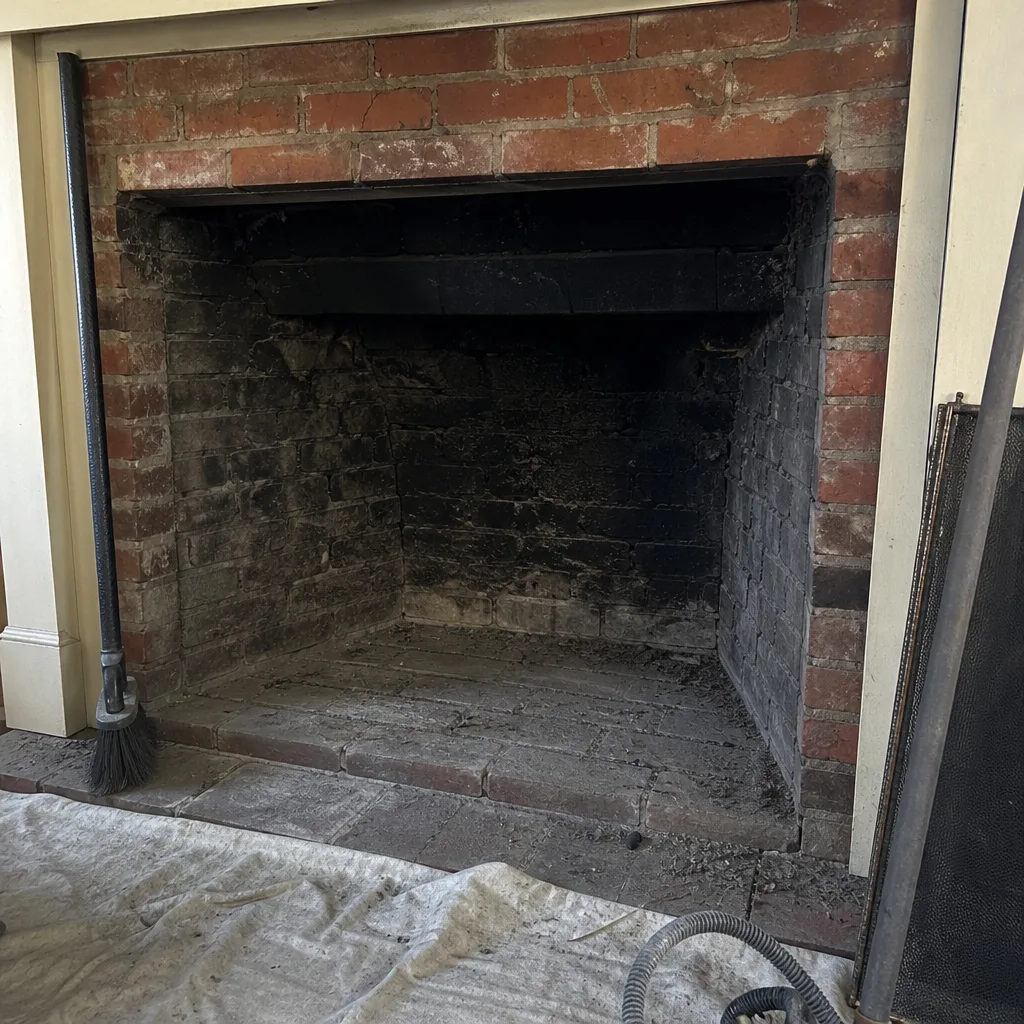
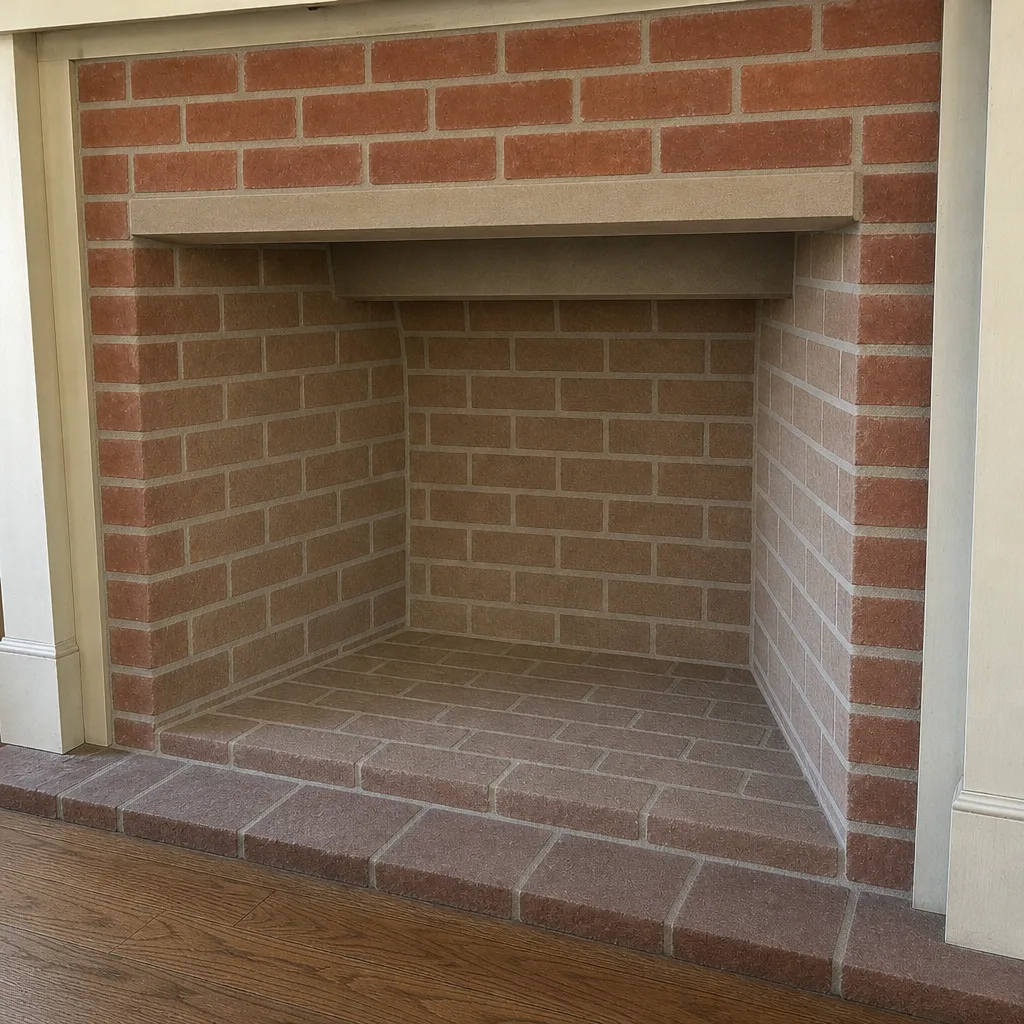
See the difference
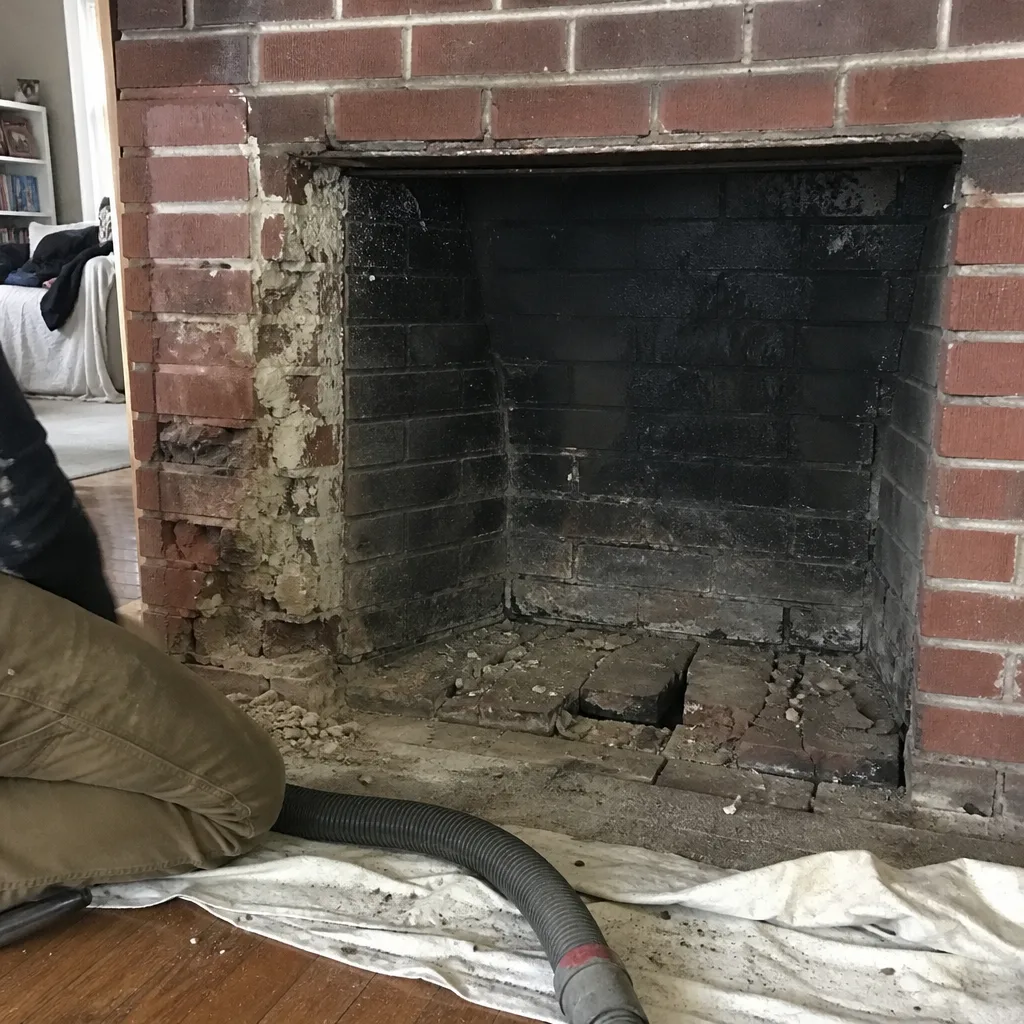 Before
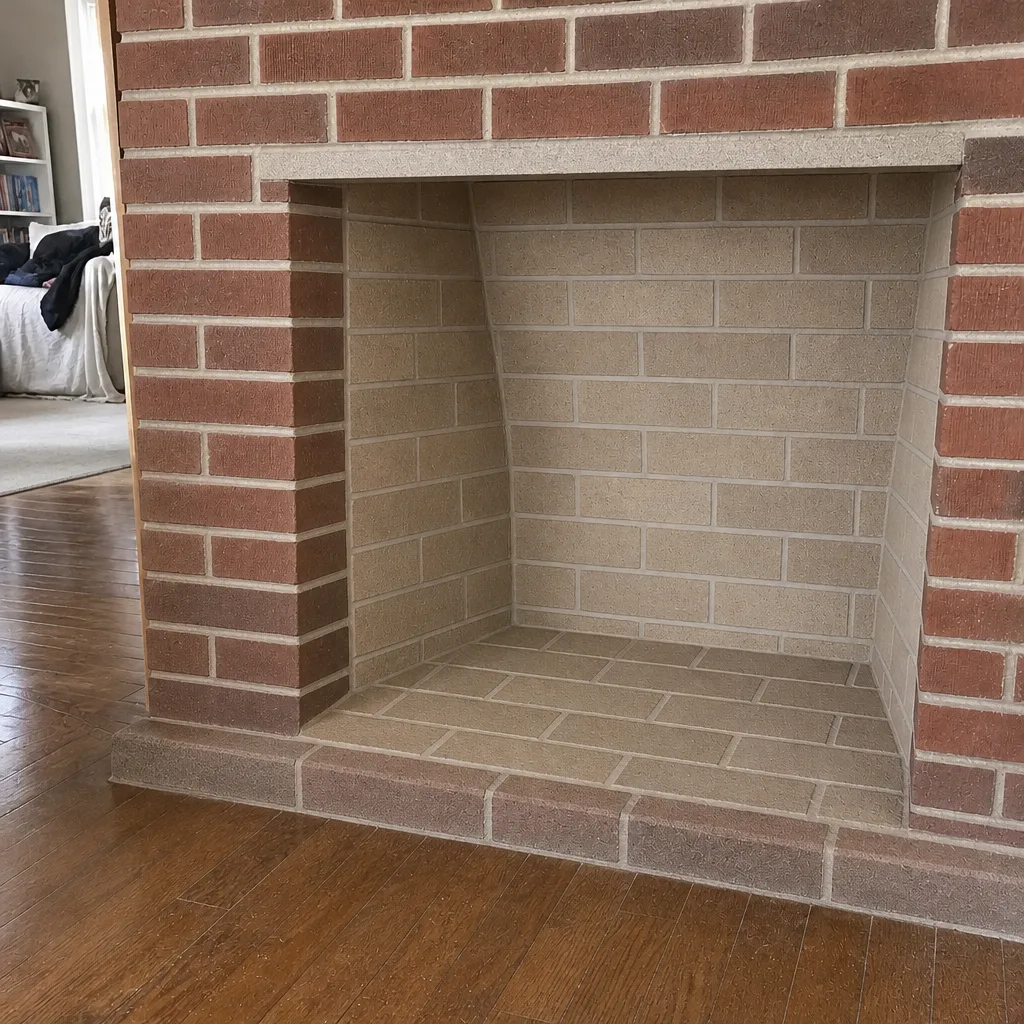 After
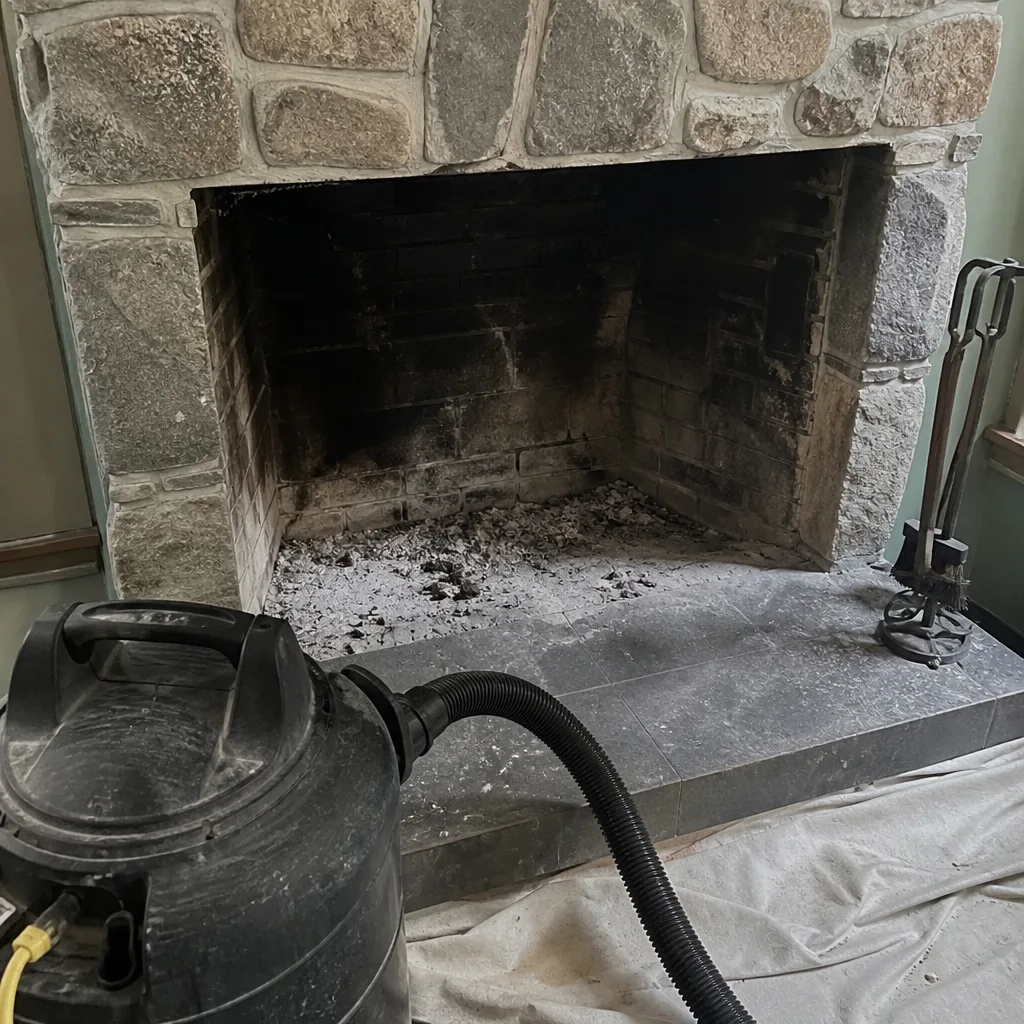 Before
 After
 Before
 After
Frequently Asked Questions
The cost depends on the chimney’s condition, the number of flues, and whether the visit includes a camera inspection. The right way to get an accurate number is a free estimate after a look at the actual chimney. Call (888) 804-9712 to schedule one. Estimates are free, and the written estimate sets the price before any work is booked.
Once a year is the baseline for a chimney in active use, and that’s what we recommend for most Manchester homeowners. If you burn wood daily through the winter, you may need a cleaning before the year is up. If you burn occasionally, the annual cleaning can stretch a bit, but the annual inspection still matters because Manchester’s freeze-thaw winters do damage whether or not the fireplace was used. Call (888) 804-9712 if you’re unsure of the last time yours was done.
Most New Hampshire home sales with a fireplace or wood stove call for a Level 2 inspection with a camera. A sweep-only visit is typically a Level 1, and it doesn’t cover what a sale requires. If you’re listing in Manchester, ask for the Level 2 upfront. Call (888) 804-9712 to book one and skip the re-do.
Creosote is the residue left behind when wood burns, and it accumulates on the flue liner as a dark, tar-like layer. It is flammable, and a thick enough layer is what turns a small spark into a chimney fire. Regular cleaning removes it before it builds to that point. If you’ve been burning for a few seasons without a cleaning, call (888) 804-9712 to have the layer checked.
A proper cleaning includes the firebox, the smoke chamber above the damper, the flue liner, and the cap and crown. A brush pass down the flue column alone is not a complete cleaning. A technician should also inspect while cleaning and report what’s found. Call (888) 804-9712 to schedule a full cleaning and inspection.
Sometimes yes. A liner with cracks or gaps in the tile can be restored with a HeatShield coating that smooths and seals the interior rather than replacing the entire flue. The liner has to be sound enough to take the restoration, and a camera inspection is what determines that. If restoration isn’t appropriate, a new stainless liner, often a flexible DuraFlex system for an older or complex flue, is the alternative. Call (888) 804-9712 to find out which applies to your chimney.
Why Full Service Matters in Manchester
Manchester has a housing stock that rewards a chimney company that can do the whole job. Triple-deckers, older single-family homes, and converted heating systems mean the chimney you have is not necessarily the one the manufacturer of your current appliance was designed for. A company that inspects, cleans, and repairs has the information and the materials to handle what turns up. Manchester Chimney Cleaning has been serving Manchester since 2012, and in that time we’ve worked with the professional-grade products, HeatShield, Gelco, Olympia Chimney, Famco, and DuraFlex, that make a real repair possible. From annual sweep to full liner restoration, one crew, one call. Both the chimney flue and your dryer vent, on one visit if needed.
The Bottom Line
Chimney cleaning in Manchester is not one step. A complete cleaning covers the firebox, smoke chamber, flue, and cap, and it comes with an inspection because this climate produces the kind of masonry damage that the brush alone won’t catch. If a home sale is on the horizon, ask for a Level 2 inspection with a camera, not just a sweep. If you find a problem, a full-service company can fix it rather than tell you to call someone else. And remember that your home has two fire-risk flues, not one. Both deserve a regular look.
Call (888) 804-9712 for a free estimate. We answer 24/7. Fast dispatch from 7am to 7pm, Sunday through Friday.
Written by the team at Manchester Chimney Cleaning, serving Manchester since 2012.