
HeatShield Chimney Sweep in Manchester: A Homeowner’s Guide
Most homeowners doing research on Manchester chimney service end up confused by two words they weren’t expecting: liner restoration. The question usually goes the same way. A Level 2 inspection came back noting deterioration in the flue tiles, and suddenly the choice seems to be ignore it or pay for a full stainless reline. HeatShield is the third option, and it’s the one most sweep-only companies simply can’t offer because they aren’t equipped to apply it.
HeatShield is a resurfacing system for clay tile flue liners that have cracked, spalled, or lost mortar at the joints but are still structurally present. It seals the liner back to smoke-tight without removing it. It’s not cleaning and it’s not a patch. It’s a separate repair category, and whether it fits your chimney depends on what a camera finds. If you’d rather not sort through that yourself, call (888) 804-9712. We answer 24/7, and estimates are free.
What HeatShield Resurfacer Actually Is
HeatShield is a cementitious sealant formulated specifically for the inside of a chimney flue. It’s EPA-listed and UL-classified for the application, which matters, because not every product you can spray onto masonry is rated to sit inside a flue carrying combustion byproducts. It’s applied to the interior surface of the clay tiles, either by spray or by brush depending on the flue size and the shape of the damage, and it cures into a hard, smooth lining that restores the flue’s function as a contained passage for smoke and gases.
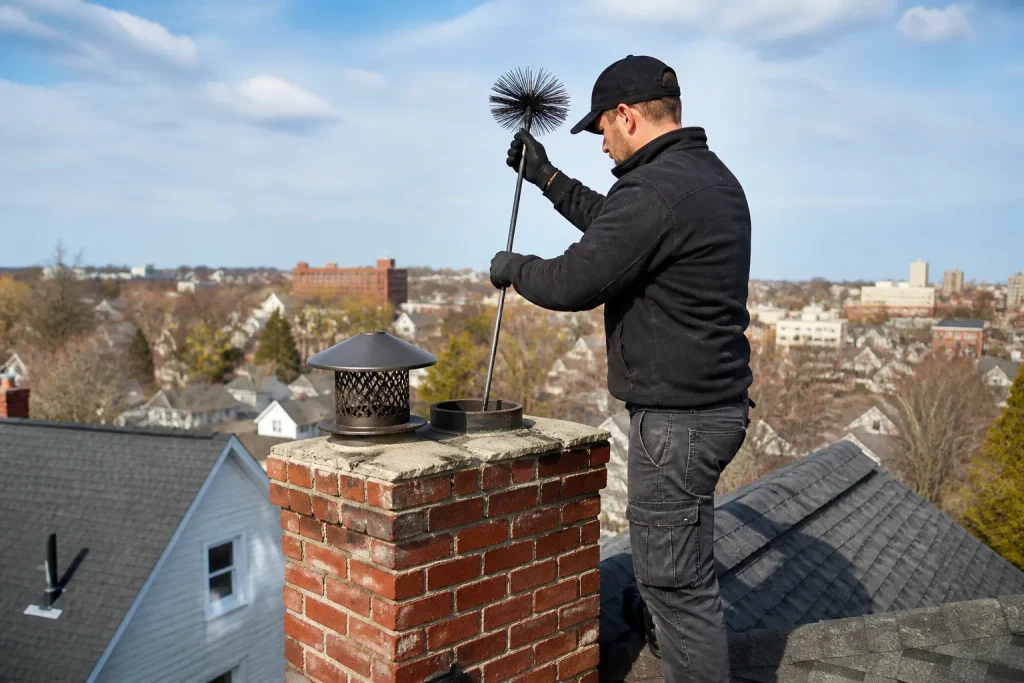
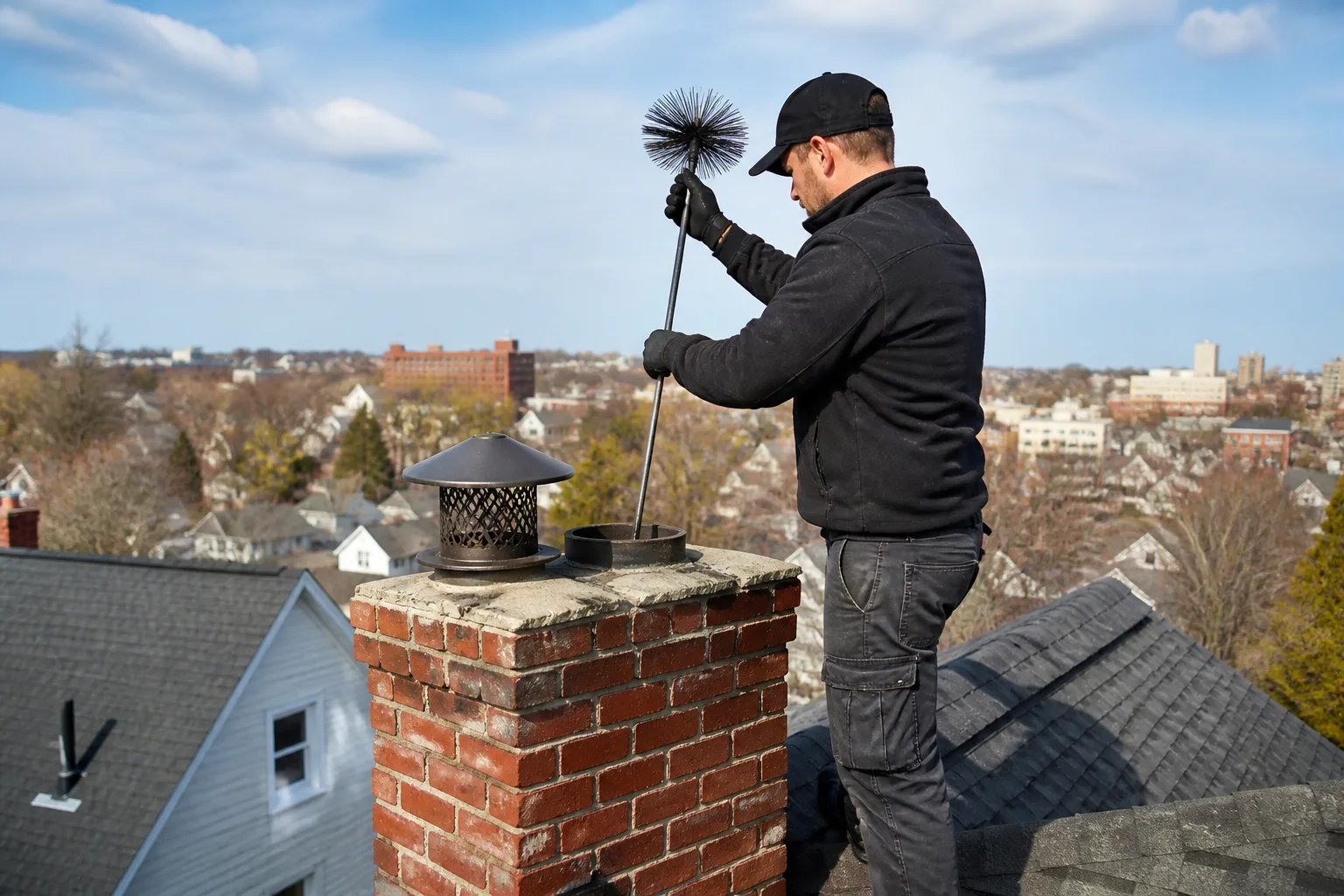
Here’s the distinction that gets lost when people search for “HeatShield chimney sweep.” HeatShield doesn’t clean anything. A sweep cleans the flue of soot and creosote first, then a camera inspection documents the condition of the tiles, and only then is HeatShield even a relevant conversation. It’s a repair material. A sweep company without HeatShield training might tell you a deteriorated liner needs a stainless reline. That’s sometimes true. It’s not always true.
At Manchester Chimney Cleaning we stock HeatShield alongside DuraFlex and Olympia Chimney because the honest answer to “what does this flue need?” depends on the flue, not on what the truck happens to carry. Having both a resurfacing system and a flexible liner option means the recommendation is based on the inspection, not inventory.
What HeatShield Fixes, and What It Doesn’t
The clearest way to understand HeatShield is to know exactly which defects it addresses. Not every damaged liner is a candidate, and any technician who tells you otherwise without a camera isn’t giving you useful information.
HeatShield is the right call when the tiles are present and the liner retains its shape. That covers a specific range of problems:
- Hairline cracks in the clay tile walls, usually from thermal cycling and settlement, that compromise smoke-tightness without breaking the tile apart.
- Spalling surfaces where the inner face of the tile has flaked or crumbled, leaving a rough interior that catches creosote and lets gases seep toward the masonry.
- Eroded mortar joints between tiles, the gaps that open up over time and are a common path for carbon monoxide and smoke to reach the chimney’s exterior structure.
HeatShield is not the answer when a tile is missing entirely, when a section of liner has collapsed, when the flue has separated or shifted out of alignment, or when the surrounding masonry has structural failure. Those conditions need a new liner, and often a flexible system like DuraFlex that can be pulled through an older or irregular flue that a rigid liner won’t fit. A resurfacing system depends on having a surface to resurface. When the tile is gone, there’s nothing for it to bond to.
This is why a camera inspection comes before a quote, not after. The recommendation follows the evidence.
Why Manchester Chimneys Get This Damage in the First Place
Freeze-thaw is the quiet culprit in a lot of the liner deterioration we inspect around Manchester. Winters here cycle repeatedly between freezing and thawing, and any moisture that has made its way into the masonry or the tile itself expands when it freezes and contracts when it thaws. Over many seasons that cycle works on the tile the way it works on a driveway with a hairline crack. What started as a small fissure widens, the tile face flakes, and the mortar joints between sections loosen.
Older homes in neighborhoods like the North End and the Millyard area tend to have liners that predate the current understanding of how much thermal movement a clay liner should accommodate, which makes them more vulnerable to this kind of wear. That’s not a defect in the house. It’s just age and material limits meeting a climate that is hard on masonry.
The practical consequence is that a Manchester chimney can look fine from the firebox and be cracked three feet up the flue. You can’t see it without a camera. This is the reason we treat the inspection as the first step and the cleaning as step two, rather than the other way around. A flue that’s clean but cracked is still a flue carrying gases toward your framing. Cleaning without inspecting misses the whole point.
How HeatShield Application Works, Step by Step
The process follows a fixed sequence, and the cure time is not negotiable. Skipping the prep or rushing the cure is how a restoration fails, so a technician who doesn’t want to talk through these steps is a technician to ask questions about.
- 1
Camera inspection. A video scan of the full flue documents the tile condition, the joint condition, and any obstruction or structural damage. You see what we see.
- 2
Cleaning. The flue is swept of soot, creosote, and loose debris. HeatShield needs a clean bond surface, so this isn’t optional.
- 3
Surface preparation. Loose or crumbling tile edges are addressed so the sealant has something sound to adhere to.
- 4
Application. The resurfacer is sprayed or brushed onto the tile interior, coating the cracks, spalled areas, and joints uniformly.
- 5
Cure. The material is left to cure fully before any fire is lit.
- 6
Post-application camera check. A second video scan confirms coverage and completeness, and you get the footage.
The camera is the part we care most about, because it’s the part that lets you verify the result rather than take a technician’s word for it. A restoration you can’t see is a restoration you can’t confirm.
HeatShield vs. a Full Stainless Liner: How to Decide
This is where the comparison gets practical. A stainless liner is a full replacement of the flue passage. HeatShield restores the liner you have. Both keep gases inside the flue. The difference is scope, cost, and what your existing tiles actually look like.
On a typical two-story Manchester home with a compromised clay liner, a HeatShield restoration generally runs less than a full stainless reline, because it doesn’t involve manufacturing and fitting an entirely new passage through the masonry. We’re not going to quote you a number over the phone, because the written estimate is what sets the price and it depends on flue size, access, and the extent of the damage. What we will tell you is that the two options are priced differently for a reason, and the estimate you get should show you the camera evidence behind the recommendation.
Reaching for a full reline when the tiles are structurally sound is overspending. Reaching for HeatShield when the tile is gone or the masonry is failing is a repair that won’t hold. The honest middle ground is a camera first, then a recommendation that says plainly which one applies and why, and tells you when a repair can safely wait a season.
If your flue needs a new liner rather than a restoration, a flexible system like DuraFlex lets us do that in a single visit rather than handing the job to someone else.
When to Call a Pro
A flue liner carries smoke, carbon monoxide, and heat. A compromised liner lets those out of the passage they belong in, and that’s not a job for a weekend ladder and a tube of sealant. Resurfacing a flue from the inside involves elevated work, a camera, and a material with specific cure requirements. It also requires knowing which defects rule out a resurfacing altogether, and that determination is made by someone standing at the chimneys looking at the tiles. If you’re not sure what’s going on in your flue, that’s a call, not a guess.
Related services in Manchester: a professional chimney sweep gets the flue clean and inspected, our dryer vent cleaning handles the other fire-risk flue in your home, and both are booked with the same team that handles any repair that surfaces.
The Bottom Line
HeatShield is a restoration layer between “ignore the cracks” and “replace the whole liner,” and it fits a specific set of defects: cracked, spalled, or eroded clay tile that’s still structurally sound. Manchester’s freeze-thaw cycle is a major reason those defects show up here. A camera inspection is what tells you whether HeatShield is the right call or whether a full liner is the better investment, and you should see the footage before you agree to either.
If you’re in Manchester and need help, Manchester Chimney Cleaning offers free estimates. Call (888) 804-9712. We answer 24/7. Fast dispatch, 7am-7pm, Sunday through Friday.
Frequently Asked Questions
No. HeatShield is a resurfacing material applied inside a clay tile flue to seal cracks, spalling, and eroded mortar joints. A chimney sweep is the cleaning and inspection service that comes first and tells you whether HeatShield is even needed. They are two different jobs that often happen in the same service visit.
HeatShield typically costs less than a full stainless liner installation because it restores the existing clay tile rather than replacing the entire flue passage. The exact range depends on your flue size, access, and the condition found on camera, and the written estimate you receive sets the final price. Call (888) 804-9712 for a free estimate, inspection included.
It comes down to whether the tile is present and structurally sound. Hairline cracks, spalling surfaces, and eroded joints can usually be restored with HeatShield. Missing tiles, collapsed sections, or structural failure in the masonry require a new liner, often a flexible system. Only a camera inspection shows which condition you have, so don’t accept a quote without one. Call (888) 804-9712 and we’ll walk you through what the footage shows.
Cracks and eroded joints grow, not shrink. Heat and moisture continue to work on the tile, and gases that should stay contained can reach the masonry and eventually the framing around your chimney. It won’t fail overnight, but it won’t fix itself either, and the cost of addressing it only goes up as the defect widens. Call (888) 804-9712 for a free estimate. A camera inspection tells you whether it can safely wait or needs attention this season.
Written by the team at Manchester Chimney Cleaning, serving Manchester since 2012.
Need Chimney Cleaning Help?
Call Manchester Chimney Cleaning - licensed & insured, with free written estimates in Manchester.
(888) 804-9712